Building Your Own BBQ Bucket List: A Chicago Guide
There is a moment every barbecue lover knows. You take that first bite of smoked brisket and the bark cracks just right. The smoke ring is deep and the fat renders into something closer to butter than meat. That moment is why people drive across town, stand in long lines, and argue about which joint does ribs better. In Chicago, those arguments are part of the culture. The city has a deep, often overlooked barbecue tradition that runs from the South Side to the suburbs. Building a real BBQ bucket list BBQ Bucket List here means more than just copying a list from a magazine. It means understanding the history, the pit styles, and the neighborhoods that shaped them.
Chicago barbecue is not Texas barbecue. It is not Kansas City or Memphis either. It has its own identity, rooted in the Great Migration when Black families brought whole-hog and pit-cooking traditions from the Mississippi Delta, Alabama, and Arkansas. Those traditions adapted to urban life. Instead of wood-burning pits in backyards, you got brick pits in storefronts, often fueled by a mix of charcoal and wood. The sauces leaned sweet and tangy. The sides, like mild sauce-soaked fries and Atomic Yellow hot links, became signatures. A proper BBQ bucket list BBQ Bucket List for Chicago respects that lineage. You cannot just hit the places that show up on national TV segments. You have to find the spots that have been running the same pit for forty years.
Start With the Neighborhoods
The best way to approach a Chicago barbecue tour is by neighborhood. Each area has its own style and history. On the South Side, you find the old-school joints that use aquarium-smokers, which are essentially glass-fronted brick pits. They give the meat a distinct texture and smoke level that you do not find elsewhere. Places like those on 71st Street or in the Greater Grand Crossing area have been around for decades. The ribs there are often cooked with a dry rub and then finished with sauce on the side. The rib tips, a Chicago specialty, are fatty, smoky, and best eaten right out of the foil.
Over on the West Side, the style changes. You see more influence from the Carolinas, with pulled pork and whole shoulders. The sauces there tend to be vinegar-based, though still with a sweetness that feels Midwestern. A few of those spots have been open since the 1950s. They do not have websites. They have handwritten signs and a regular crowd that has been coming since childhood. That is the kind of place that belongs on any serious BBQ bucket list BBQ Bucket List. It is not about the decor or the Instagram appeal. It is about the pit master who knows exactly when to wrap the meat.
What Makes a Great List
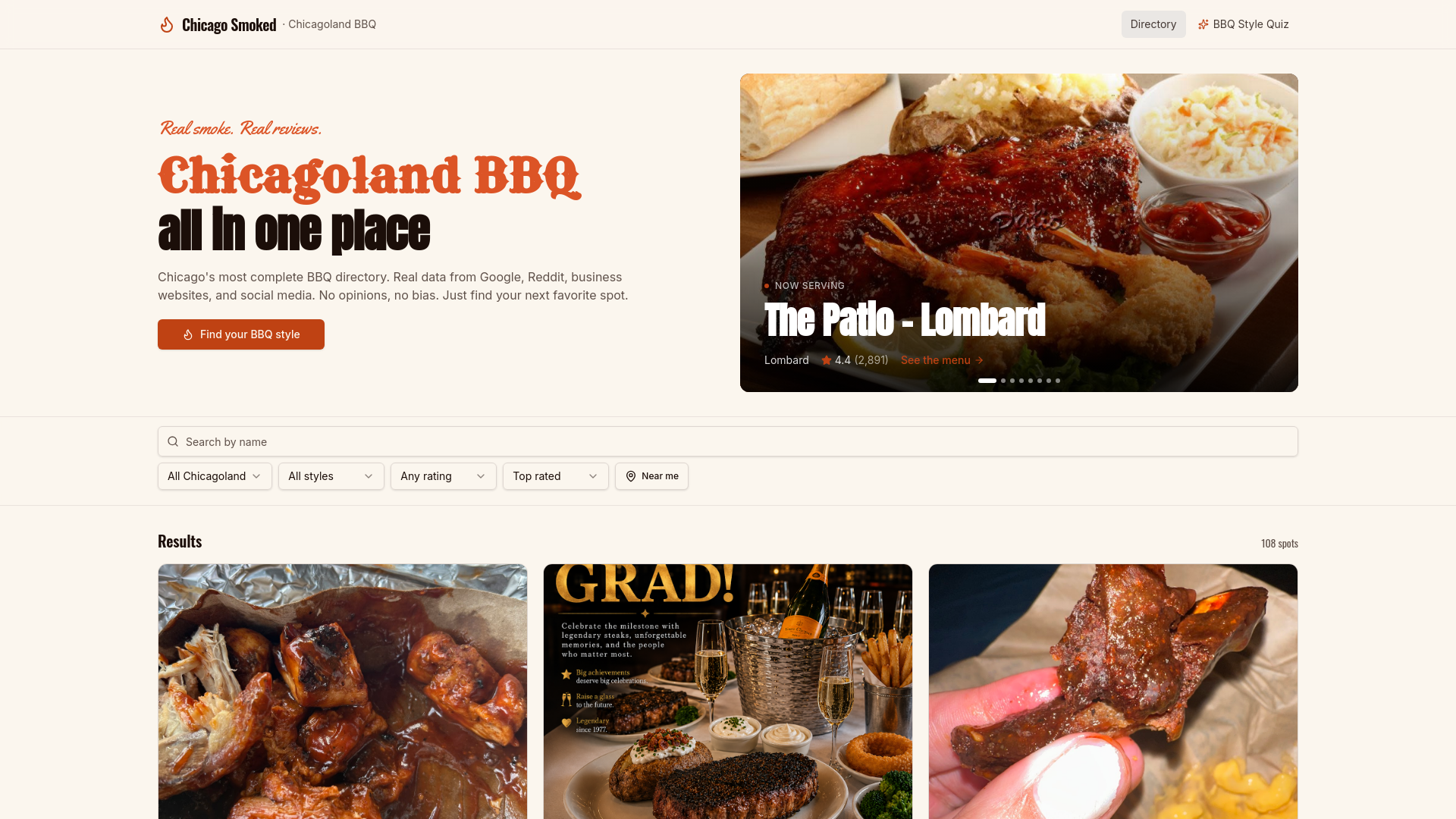
A good barbecue bucket list is personal. You can start with the famous names, the ones that show up in every travel guide. But the real value comes from adding the places that are hard to find, the ones that do not advertise but have a line out the door on Saturday afternoon. Those are the joints where the brisket sells out by noon and the only choice is what kind of rib you want. Building that list takes time. You have to talk to people, read local food blogs, and pay attention to community forums. The BBQ Bucket List site helps by organizing that data into something you can actually use, with real reviews and updated hours. But the site is a tool, not a substitute for getting out there and tasting.
When I started putting together my own list, I made a few rules. First, no place gets on the list unless I have eaten there at least twice. Second, I try everything on the menu at least once, including the sides. A place can have great ribs but terrible coleslaw, and that matters for the overall experience. Third, I ask the pit master what they would order if they were eating there. That question has led me to hidden menu items and off-menu specials that never made it onto the printed board. For example, one spot on the South Side does a smoked meatloaf on Fridays only. It is not listed anywhere. You just have to know.
The Role of Sauce and Rub
Sauce is a dividing line in Chicago barbecue. Some places treat it as a finishing glaze, brushed on the meat right before serving. Others serve it on the side, expecting you to apply it yourself. There is no right answer, but knowing the difference helps you understand the pit master's philosophy. A heavy sauce usually means the rub is simple, maybe just salt and pepper. A light sauce or no sauce means the rub is doing the work, with layers of paprika, garlic, and maybe a little sugar. The best way to judge is to order a rack of ribs dry and see if they stand on their own. If they do, the place knows what it is doing.

Tracking Your Progress
One of the challenges of a barbecue bucket list is keeping track. You visit a place, you eat, you forget the name six months later. That is where a system helps. You can keep a notebook, use a notes app, or rely on a directory like BBQ Bucket List that lets you mark places as visited and leave your own notes. The key is to record what you ate, what you thought, and what you would order next time. That way, when a friend asks where to go for the best hot links, you have an answer ready. Over time, your list becomes a map of your own tastes. It shows you what styles you prefer, which neighborhoods you gravitate toward, and which pit masters you trust.
I have been keeping a Chicago barbecue journal for about three years now. It started as a simple list of places to try. It turned into a record of conversations, weather, and the way smoke smells different in winter. Some of the best ribs I have ever had came from a place that was only open four hours a day, three days a week. The owner told me he had been running that pit since 1972. He did not care about reviews. He cared about consistency. That kind of dedication is what makes a barbecue bucket list worth building. It is not about checking boxes. It is about finding the people who treat barbecue as a craft.
Practical Tips for Your Own List
- Start with one neighborhood and try every place within a two-mile radius. You will notice patterns and differences that a single visit cannot show.
- Go early. The best meat sells out first. If a place opens at 11 a.m., be there at 10:45. Use the wait time to talk to other customers.
- Order the least popular item at least once. It forces you to evaluate the pit's baseline skill, not just their signature dish.
- Take notes immediately after eating. Your memory of smoke and spice will fade within an hour. Write down what worked and what did not.
- Share your findings. Barbecue is a communal food. A good list gets better when other people add their own discoveries.
When the List Feels Overwhelming
Chicago has more than fifty barbecue spots that could legitimately appear on a serious list. That number can feel intimidating. You do not have to try them all at once. Treat it like a long-term project. Pick one Saturday a month and explore a new area. Bring a friend and split an order of ribs and a link sandwich. That way you get more variety without overeating. Over the course of a year, you will have tried a dozen places. That is a solid start. After two years, you will have opinions. After three, you will be the person friends text when they want to know where to go for the best brisket in the city.

The beauty of a barbecue bucket list is that it changes. Places close. New ones open. Pit masters retire and their apprentices take over. The list you build today will look different five years from now. That is fine. The point is not to create a permanent ranking. It is to document your experience of a living, breathing food tradition. Chicago barbecue is not static. Neither should your list be. Keep updating it. Keep visiting the old spots and giving the new ones a fair chance. The best barbecue is the one you are eating right now, with people who care about it as much as you do.
Corrections
Spot something wrong? Send it to the desk and it gets fixed in the open.